How to form sentences in Japanese: step-by-step method
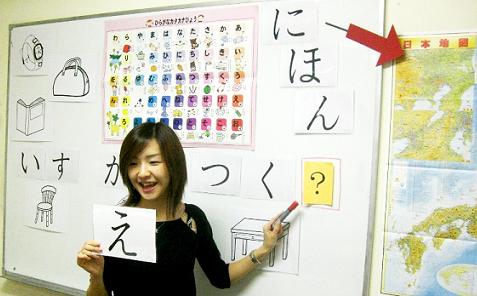
Learn to form sentences in Japanese starting from the predicate, organizing each group with particles and avoiding word-for-word translations.

Learn to form sentences in Japanese starting from the predicate, organizing each group with particles and avoiding word-for-word translations.
Understand the difference between transitive and intransitive verbs in Japanese, see pairs with が and を, examples, exercises, and common mistakes.
The Japanese particle made is a very common particle in Japanese sentences. It usually establishes a sense of limit, be it temporal, spatial or quantitative (quantities). In most Japanese texts, the particle made has one or two
The Japanese particle kara usually marks the elements of a sentence that appear before it. If the element is a noun, the particle kara can take on the meaning of "de, da, do". And when the element accompanying the

Now let's expand your knowledge about the YA particle in Japanese! The main function of the ya particle is simply to create lists of Japanese nouns. In this way, we can cite a set of things existing somewhere or things