
To read a text in Japanese, it is not enough to recognize hiragana, katakana, and kanji in isolation. You need to perceive how these scripts alternate, where a word likely ends, what the reading direction is, and how punctuation organizes the sentence.
This combination seems confusing at first, but it works like a visual map. Kanji usually highlights meaning cores; hiragana reveals particles and endings; katakana signals loanwords, foreign names, and other specific uses. The change in script helps the reader segment a text that normally does not separate each word with spaces.
What you need to observe in a Japanese text
An initial reading can be divided into four questions:
- Which types of script appear? Identify kanji, hiragana, and katakana before trying to translate.
- Where are the sentence units? Observe particles, inflections, and script changes to locate possible boundaries.
- In which direction does the text go? Confirm whether the layout is horizontal or vertical.
- Which signs organize the reading? Periods, commas, quotation marks, and parentheses help separate ideas, speech, and additional information.
This article presents how these elements work together. To learn about each system separately, see the overview of the Japanese alphabet with hiragana, katakana, and kanji.
How hiragana, katakana, and kanji divide the work
Modern Japanese uses different types of characters in the same text. The National Institute for Japanese Language presents kanji, hiragana, katakana, and roman letters as scripts that can coexist in the language. This does not mean they all serve the same function.
- Kanji: appears in many noun, verb, and adjective stems and helps recognize meanings.
- Hiragana: records particles, inflected endings, various words, and auxiliary readings.
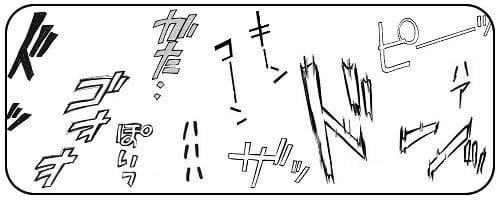
- Katakana: is frequent in loanwords, foreign names, technical terms, onomatopoeia, and graphic effects.
- Rōmaji: appears in acronyms, brands, names, signage, and contexts aimed at transcription, but it does not replace common Japanese writing.
These are trends, not absolute boxes. A word may appear with a different spelling depending on convention, audience, or stylistic effect. The guide on when to use hiragana, katakana, and kanji delves into these choices without confusing them with the task of reading an entire text.
A Japanese sentence analyzed in parts
私はコーヒーを飲みます。
わたしはコーヒーをのみます。
Watashi wa kōhī o nomimasu.
I drink coffee.
The sentence contains no spaces, but the functions help you see its blocks:
- 私 (watashi) is “I” and appears in kanji;
- は marks the topic and is in hiragana;
- コーヒー (kōhī) is “coffee” and appears in katakana;
- を marks the direct object and is in hiragana;
- 飲 carries the lexical base of “to drink,” while みます shows the verb ending;
- 。 ends the sentence.
The alternation between kanji and kana creates visual cues. Instead of immediately looking for a word-for-word translation, first identify the particles and the verb. The word order in Japanese helps explain why the verb often appears near the end.
Why Japanese normally doesn't use spaces
In general-use Japanese texts, words often appear in sequence, without the regular graphic separation found in Portuguese. The material from the National Institute for Japanese Language and Linguistics on morphological analysis explains that Japanese does not normally use space-segmented writing and shows how the same sequence may require analysis to be divided into words.
The reader does not rely on a single cue. Kanji, kana, particles, endings, vocabulary, and grammatical structure work together. In 学校で日本語を勉強します, for example, で and を help mark relationships, while the blocks in kanji highlight 学校, 日本語, and 勉強.
Spaces can still appear in children's materials, teaching resources, subtitles, titles, interfaces, or by graphic design choice. Therefore, the practical rule is not “Japanese never uses spaces,” but rather “common Japanese writing does not systematically separate each word with spaces.”.
How to read horizontal and vertical texts
Japanese can be arranged horizontally or vertically. In the modern horizontal format, called yokogaki (横書き), lines typically run from left to right and top to bottom. It is the predominant format on websites, apps, technical materials, and much digital content.
In the vertical format, called tategaki (縦書き), characters descend in columns, and the next column is to the left. Thus, reading starts at the rightmost column and moves leftward. This format remains common in novels, newspapers, manga, literature, and traditional graphic design, although each publication may combine elements.
Numbers, Latin letters, and signs may change orientation depending on the typographic design. Instead of mentally rotating the page, look for the first block, observe the alignment of characters, and follow the direction of lines or columns. The article on vertical and horizontal Japanese writing delves into both formats.
The most important punctuation marks
Japanese punctuation helps organize reading, but it does not always correspond to a direct swap with Portuguese punctuation.
- 。 (kuten) ends a sentence.
- 、 (tōten) marks pauses and internal relationships, with usage depending on structure and style.
- 「 」 often delimits speech, quotation, or emphasis.
- 『 』 may appear in quotes within quotes and in titles of works, depending on the editorial context.
- ・ (nakaguro) can separate items, foreign names, or parts of an enumeration.
- ( ) adds parenthetical information.
Current guidelines from the Agency for Cultural Affairs of Japan adopt 。 and 、 as the standard for public documents, with the possibility of Western commas in certain horizontal texts as long as usage is consistent. To see more signs and examples, see the page on punctuation in Japanese texts.
How furigana helps without replacing kanji
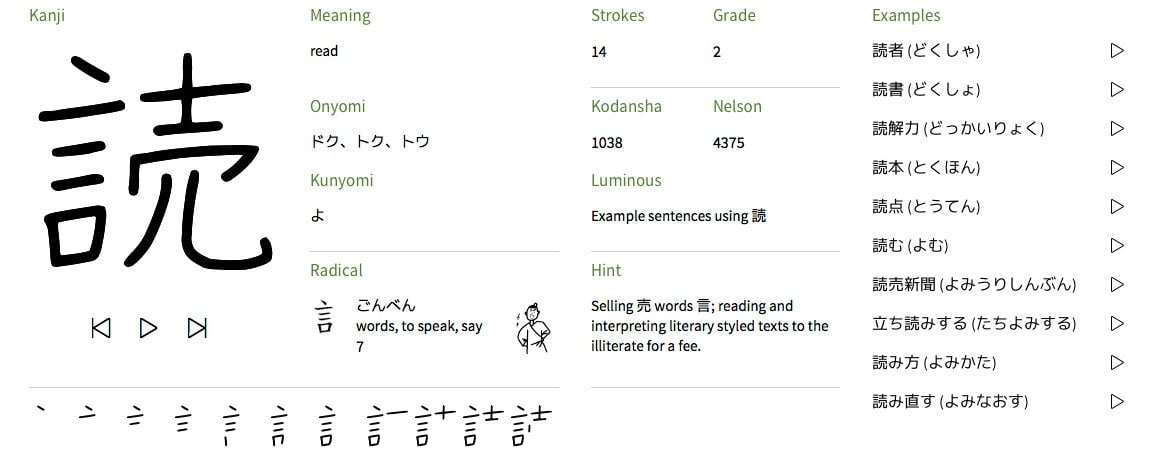
Furigana is a small reading, usually in hiragana, placed next to a kanji. It appears in educational materials, works for young audiences, uncommon names, and words whose reading may not be predictable.
When you encounter furigana, read the set as a single word: the kanji provides graphic and semantic information; the kana indicates the pronunciation chosen in that context. This is different from translating each character in isolation.
It is not necessary to know all kanji before starting to read. The goal is to gradually expand word recognition, using furigana, context, and dictionary as support. The Japanese kanji guide organizes this learning by vocabulary and usage.
A five-step method to start reading
- Confirm the direction. Check whether the text is in horizontal lines or vertical columns.
- Locate the punctuation. Divide the passage into smaller sentences before analyzing details.
- Mark particles and endings. Hiragana such as は, が, を, に, and で reveals important relationships.
- Look for known words. Use the shift between kanji, hiragana, and katakana as a clue, without assuming that every change creates a perfect boundary.
- Confirm in context. Check the reading and meaning of the whole word; then reread the sentence without relying on rōmaji.
The Japan Foundation recommends learning characters linked to already known words, treating writing as part of vocabulary. This guidance appears in the Marugoto pedagogical guidelines and avoids memorizing symbols without context.
Mistakes that make reading harder
- Using rōmaji as a permanent step: it can support the beginning, but it hides clues present in the original writing.
- Trying to translate before segmenting: first identify the sentence, particles, and verb; then look for natural equivalences.
- Assuming that every kanji is an isolated word: many characters participate in compounds or receive hiragana endings.
- Ignore katakana: loanwords, names, and technical terms may carry the core information of the passage.
- Apply absolute rules: spelling, punctuation, and presentation vary by genre, audience, and editorial style.
To consolidate the basic forms before reading longer texts, use the hiragana and katakana chart. The story of how this writing system came to be is in the article about the origin of japanese alphabet.
What to practice in the next reading
Choose a short sentence and read it twice. In the first reading, don't translate: identify direction, punctuation, writing systems, particles, and possible blocks. In the second, confirm the vocabulary and reconstruct the natural meaning.
With practice, a text no longer seems like a continuous sequence of symbols. The combination of kanji, hiragana, katakana, punctuation, and structure guides the eyes—exactly what allows reading without relying on spaces between all words.
Does Japanese use spaces between words?
Common Japanese texts do not systematically separate each word with spaces. The reader uses kanji, kana, particles, endings, vocabulary, and grammar to recognize the blocks. Spaces may appear in educational materials, children's materials, or by graphic choice.
Is Japanese read from right to left?
It depends on the layout. In modern horizontal text, reading typically goes from left to right. In vertical text, characters descend in columns and reading advances from the right column to the left.
Why do hiragana, katakana, and kanji appear in the same sentence?
Because they serve complementary functions. Kanji highlights many meaning cores, hiragana shows grammatical elements and inflections, and katakana is common in loanwords, foreign names, and other specific uses.
Do you need to know all the kanji to start reading?
No. It is possible to start with short sentences and gradually expand vocabulary. Furigana, context, and dictionaries help confirm the reading, but the ideal is to learn kanji within real words.
Is Rōmaji part of Japanese writing?
Roman letters appear in transcriptions, acronyms, names, brands, and signage. They can help beginners, but they do not replace the mixed kanji and kana system normally used in Japanese texts.